

Folding doors, also known as bi-fold doors, have become increasingly popular in modern homes and commercial spaces. They’re stylish, space-saving, and can completely transform the way indoor and outdoor areas connect. In this guide, we’ll take a closer look at the main types of folding doors, their components, the materials used to make them, and the key benefits they bring. 👉 Explore our folding door products here
1. Types of Folding Doors
Folding doors come in different styles and materials, each designed for different needs and spaces:
- Aluminum Folding Doors – Lightweight, durable, and corrosion-resistant. Perfect for large openings like patios and balconies.
- Wood Folding Doors – Natural and elegant, great for interiors, but they require proper care against moisture and warping.
- Steel Folding Doors – Strong and secure, often used in industrial or heavy-duty applications.
- PVC Folding Doors – Lightweight, affordable, and resistant to moisture. Commonly used for interiors or where cost control is important.
- Motorized Folding Doors – Automated systems with remote or switch control, ideal for commercial areas or when accessibility is important.
2. Key Components of a Folding Door
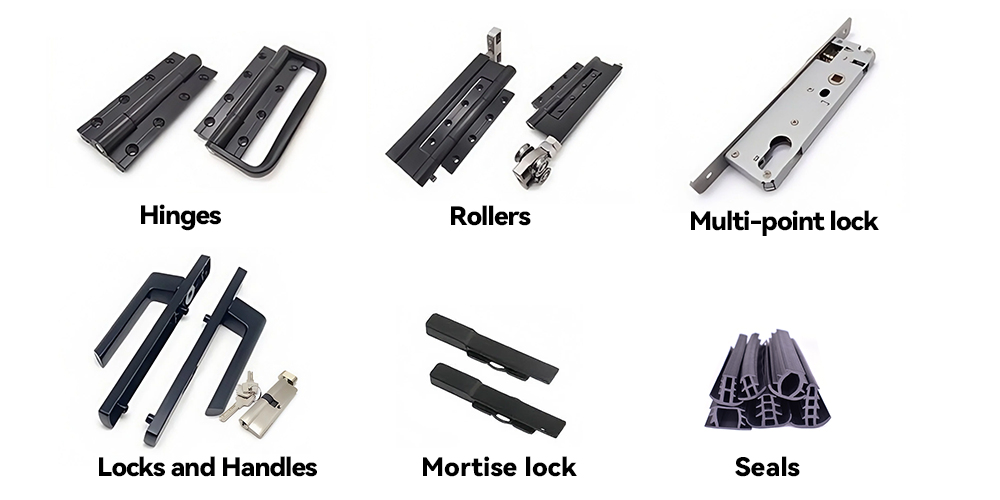
Behind every smooth and secure folding door is a set of well-designed parts that work together. Here’s what makes up a typical folding door system:
- Door Panels – The main sections of the door, which can be solid, glass-filled, or patterned.
- Hinges – Connect the panels and allow them to fold smoothly. Durability here is essential.
- Tracks – Usually at the top or bottom, guiding the doors as they slide and fold. Top-hung tracks are great for heavy doors, while bottom tracks are more common.
- Rollers – Attached to the panels, they ensure smooth movement and help distribute weight evenly.
- Seals and Gaskets – Prevent drafts, water leakage, and improve sound insulation.
- Threshold – The base of the door. Recessed thresholds are popular for creating a flush floor finish and barrier-free access.
- Locks and Handles – From single-point to multi-point systems, they’re vital for security,and the exterior keylock is also required for most exterior places.
- Optional Add-ons – Such as soft-close systems or safety features to prevent fingers from getting caught.t
3. Materials and Manufacturing
The material and production process behind folding doors play a big role in their performance, style, and cost.
- Aluminum Profiles – Commonly used because they’re strong yet lightweight. Surface treatments include anodizing, powder coating, or wood-grain finishes. High-end systems often include a thermal break for better insulation.
- Glass – Options include double-glazed units, laminated glass, or Low-E glass for improved energy efficiency and safety.
- Panel Fillings – Aluminum panels can be reinforced with PU foam, honeycomb cores, or other composites for extra strength and insulation.
- Hardware – Stainless steel or treated steel hinges, rollers, and handles are key to long-lasting performance.
- Seals – High-quality EPDM or TPV gaskets that resist UV and aging.
- Surface Finishing – Powder coating and wood-effect finishes not only improve appearance but also protect against corrosion.
- Production Process – Includes precise cutting, CNC machining, welding or assembling, and final testing for strength, durability, and sealing performance.
4. Advantages of Folding Doors
So, why choose folding doors over traditional doors or sliders? Here are their biggest advantages:
- Wide Openings – When folded back, the panels stack neatly to one or both sides, creating a huge, unobstructed opening. Perfect for connecting indoor and outdoor spaces.
- Space-Saving – Unlike swing doors, folding doors don’t need much clearance, making them ideal for smaller or narrow spaces.
- Flexible Design – You can customize the number of panels, their size, and whether they include glass or decorative patterns.
- Natural Light and Ventilation – With large glass sections, folding doors brighten interiors and allow fresh air to flow freely.
- Modern Aesthetics – They instantly upgrade the look of a property and add value.
- Optional Automation – Electric folding systems bring convenience for commercial projects or accessibility needs.
- Durability and Easy Maintenance – Aluminum and composite doors are highly resistant to weather. Regular cleaning of the tracks and occasional lubrication keep them working smoothly.
5. Installation and Maintenance Tips
To make the most of folding doors, both installation and upkeep matter:
- Accurate Measurements – Proper fitting ensures smooth operation and long-term durability.
- Waterproofing – For outdoor use, thresholds and drainage system are critical.
- Track and Hardware Care – Clean tracks regularly and check rollers for wear.
- Seal Check – Inspect rubber seals and replace them if they lose elasticity.
- Professional Installation – Folding doors involve precision alignment, so professional installation is recommended.
Final Thoughts
Folding doors are more than just a design statement; they’re practical solutions that combine beauty, flexibility, and functionality. Whether you’re creating a terrace, connecting your living room to your garden, or creating a stylish interior partition, folding doors offer endless possibilities. With the right materials and correct installation, folding doors will last a lifetime and make everyday life more enjoyable.
Looking for custom aluminum folding doors for your home or project? Contact our factory for a free design consultation today!
More Articles
You can learn Door & Window Knowledge, Shopping Guide and Inspiration & Solutions in our articles


