
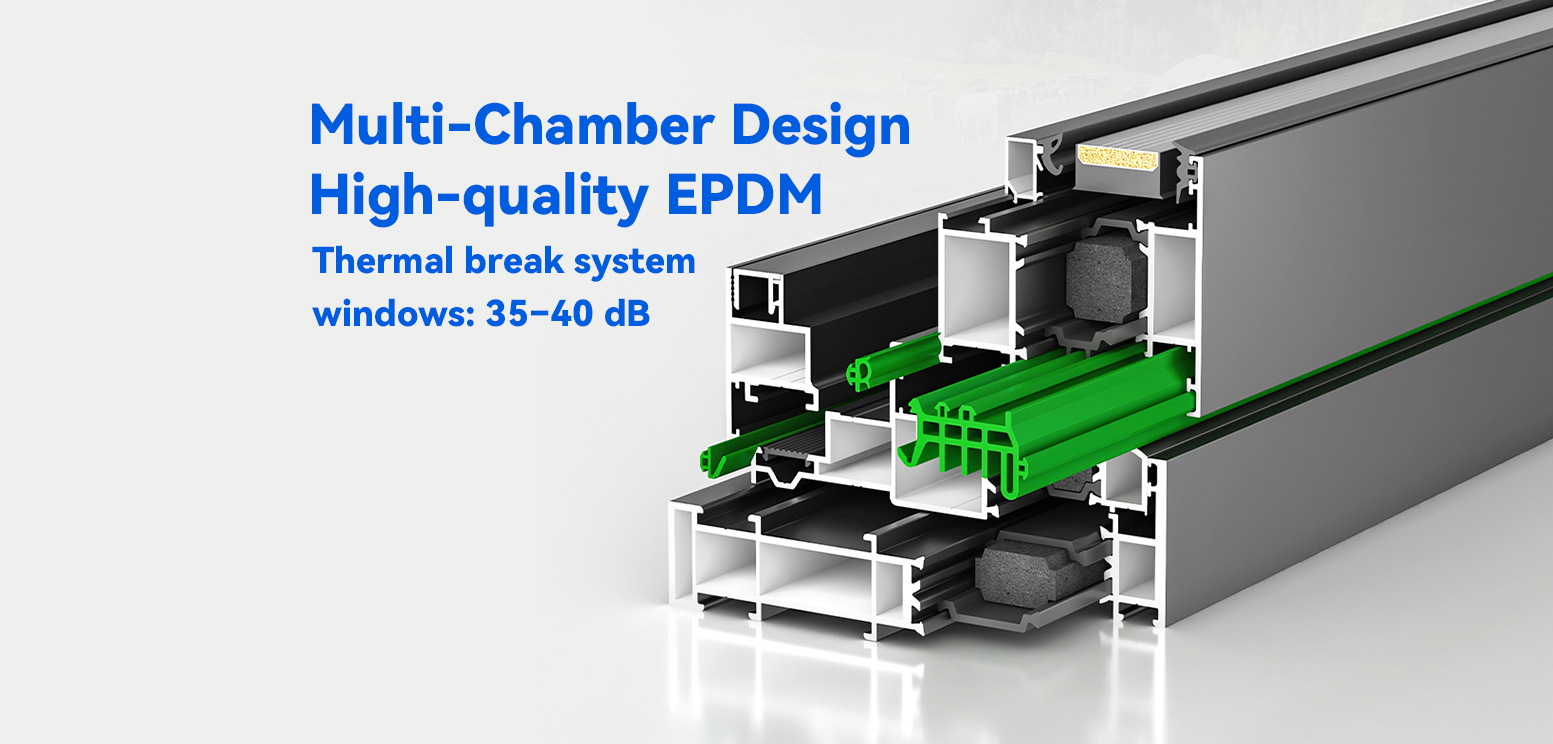
With the acceleration of urbanization, noise pollution has become a major challenge in modern life. Choosing a high-performance aluminum window system is not only crucial for improving home comfort but also a long-term investment in quality of life. Compared to traditional windows, aluminum window systems utilize more scientific and sophisticated sound insulation designs. So, what are the key factors that influence sound insulation? This article will examine the window frame structure, glass configuration, sealing strips, and hardware in detail, utilizing data and real-world examples to provide a clear understanding.
1. Frame Structure: Thermal Break + Multi-Chamber Design
Principle:
Multi-chamber thermal break aluminum profiles form multiple “air chambers” inside the frame, effectively blocking sound transmission. The thermal break design reduces noise transfer by cutting off sound conduction through aluminum.
Data Reference:
Standard aluminum windows: 25–30 dB
Thermal break system windows: 35–40 dB
Recommendation:
Select profiles with a thickness of≥1.8mm and a multi-chamber design to ensure both stability and sound insulation.
2. Insulated Glass: Layers and Thickness Determine Performance
Principle:
Double or triple-insulated glass uses air or gas to block sound waves. The more layers and the wider the gap, the better the soundproofing. Laminated glass further reduces vibration and noise.•
Data Reference:
Single glass: 20–25 dB
Double glass: 35–40 dB
Triple glass + laminated glass: 45–50 dB
Case Study:
A family living on a busy street replaced their windows with triple-glazed windows. Indoor bedroom noise dropped from 65 dB to 38 dB — transforming the space from “busy street” to“quiet library.”
3. Sealing Strips: EPDM for Durability
Principle:
Sealing strips are essential for achieving airtightness. High-quality EPDM (ethylene-propylene-diene monomer) provides excellent heat resistance, weather durability, and elasticity, ensuring long-term performance and preventing sound leakage.
Comparison:
Standard PVC strips: prone to aging within 2–3 years, leading to reduced insulation
EPDM strips: durable for 10+ years, maintaining effective soundproofing
Professional Design:
Three or four layers of sealing strips can greatly enhance airtightness and ensure consistent noise reduction.
4. Hardware Components: The Final Key to Airtightness
Principle:
High-quality hardware ensures tight closure of windows, preventing gaps that cause air and noise leakage. Multi-point locking systems, dual-sealed handles, and concealed hinges all play vital roles in enhancing soundproofing.
Case Study:
A high-rise apartment upgraded to German hardware with a multi-point locking design.
The result: a 6–8 dB improvement in overall sound insulation.
Soundproofing Performance Comparison:
Window Configuration | Sound Insulation (dB) | Applicable Scenarios |
Single glass + standard aluminum | 25–30 | Regular residential areas
|
Double-glazed + standard aluminum | 30–35 | Homes on secondary roads |
Double-glazed + thermal break aluminum | 35–40 | Homes near main streets |
Triple-glazed/laminated + thermal break aluminum + EPDM strips | 45–50 | Apartments near highways or commercial zones |
Triple-glazed + premium hardware + 4-layer sealing | 50+ | High-noise urban core |
✅ Conclusion
The soundproofing performance of the window system does not depend on a single factor. Instead, it comes from the integration of frame, glass, sealing strips, and hardware.
For homeowners, here’s a quick checklist:
– Frame: Thermal break aluminum, thickness ≥1.8mm, multi-chamber design
– Glass: At least double-glazed; triple-glazed or laminated is ideal
– Sealing: EPDM material, three or more layers
– Hardware: Multi-point locking, high-quality hinges, and handles
When these four elements are properly combined, the window system can reduce indoor noise by 20–30 dB, creating a peaceful, library-like environment. This is not only a lifestyle upgrade but also a long-term investment in health and well-being.
More Articles
You can learn Door & Window Knowledge, Shopping Guide and Inspiration & Solutions in our articles


